D.W. Ellis · Oak & Lantern Press
The North does not call. It does not demand. It simply remains. For those who choose to believe that love, carried faithfully enough, outlasts everything that tries to extinguish it.
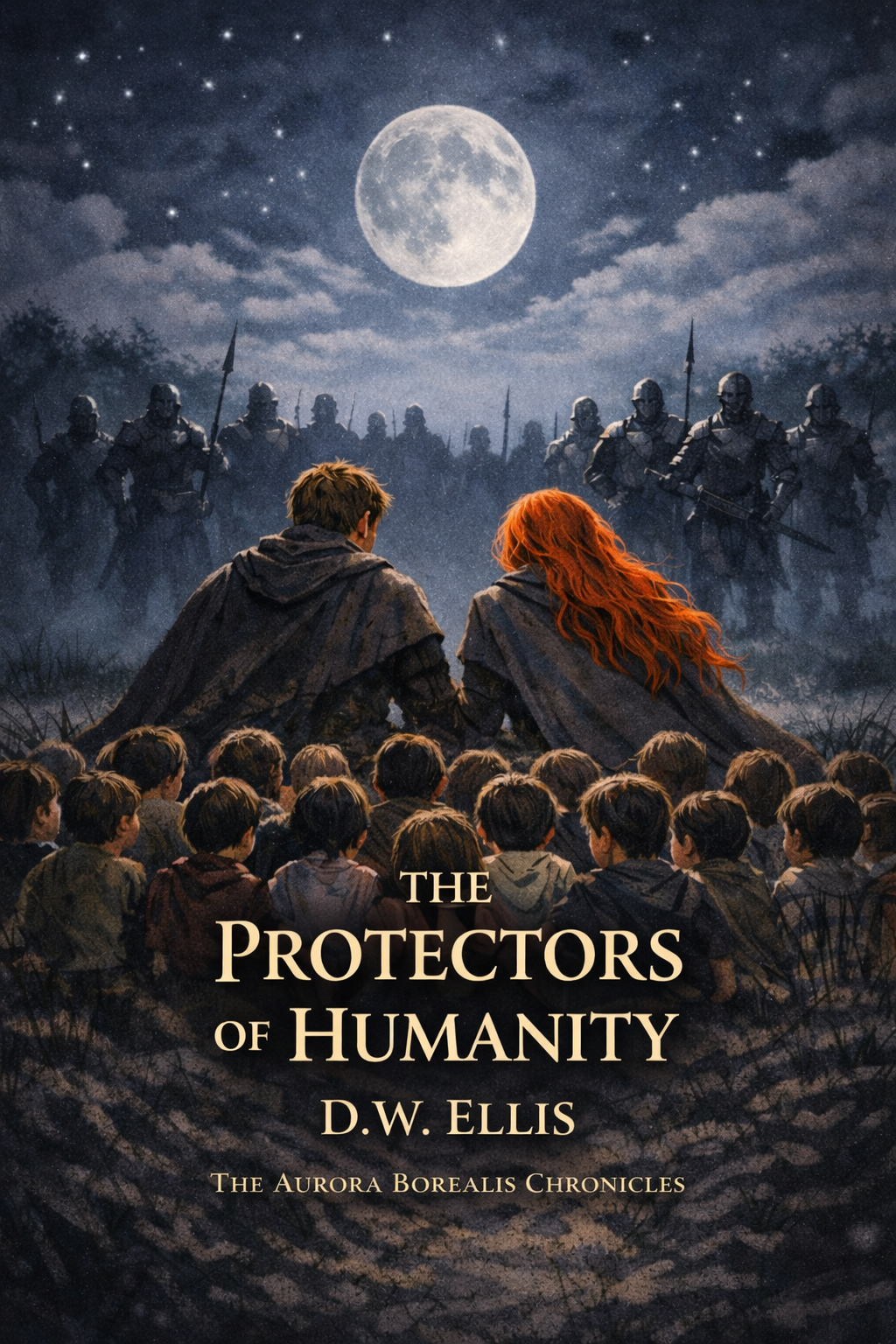
Three books. One world. A covenant older than memory — and the people who chose to carry it forward.
They are not heroes because they were chosen. They are heroes because when the light began to fail, and every reason to leave presented itself, they chose to stay.
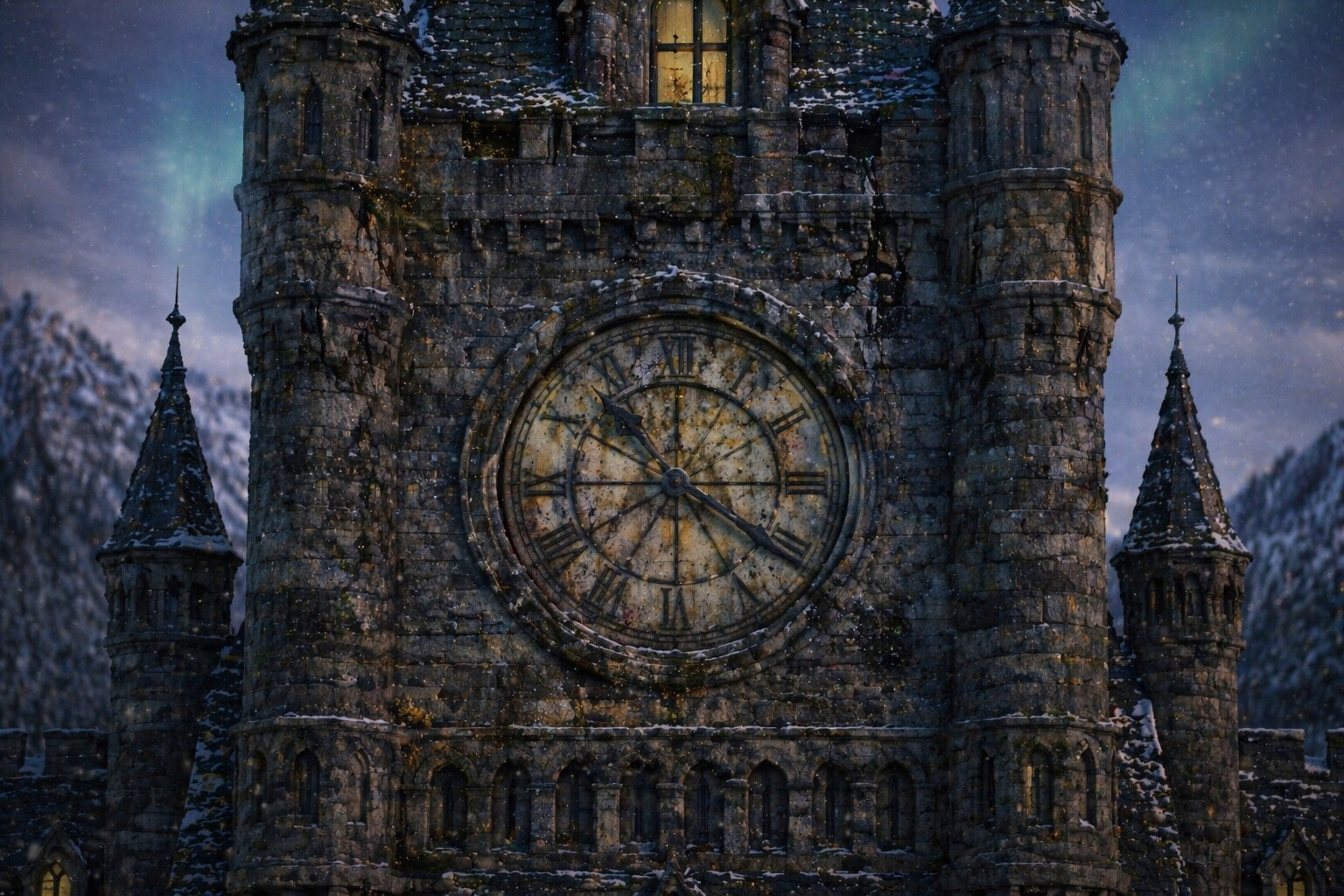
Thirty floors of stone and ice, its shape carrying the bones of old Irish fortresses. The Aurora does not merely hover above it. It weaves itself through it.
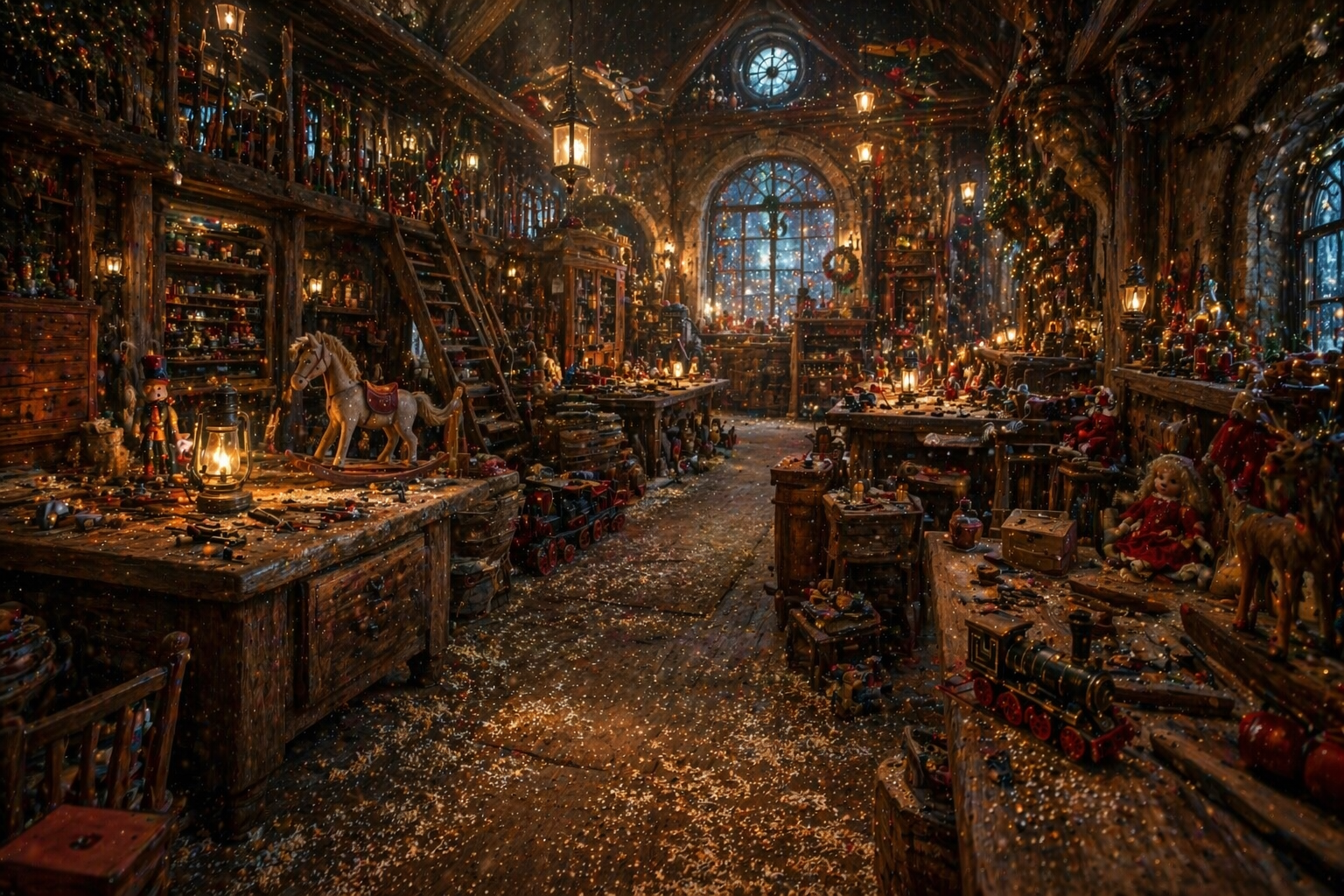
Prisms scatter light into delicate, shifting color. The forge hums deep in the mountain's heart — equal parts heartbeat and machine.
The source of the North's shimmer. The walls look like someone compressed a galaxy into stone.
A cathedral of falling water powers the Spire's machinery. A massive wheel turns in the roar of an underground river. It sounds like nothing else in the world.
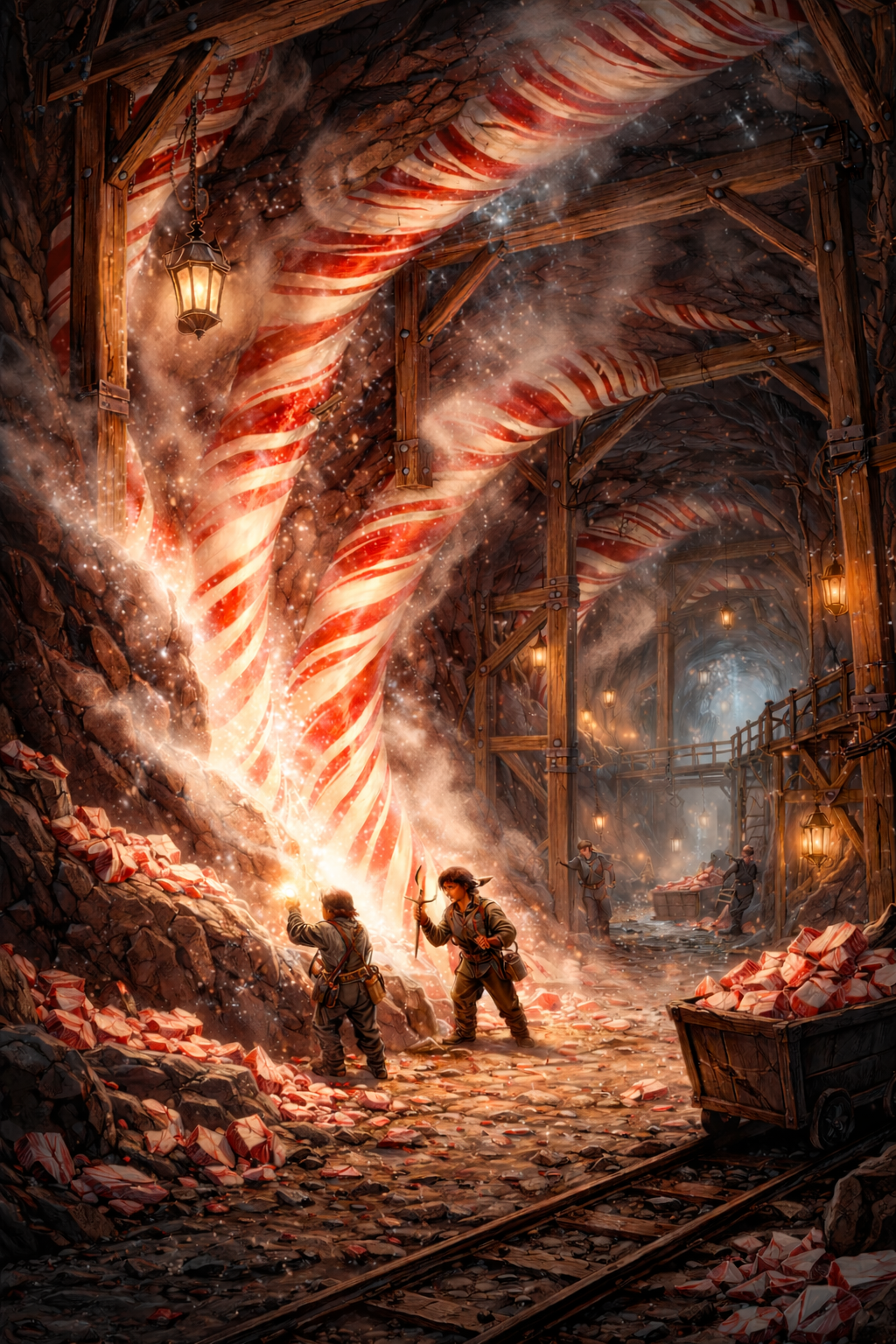
Walls of translucent ice shot through with twisting bands of red-white crystal. The smell alone is enough to disorient a grown person.
The Looking Glass does not reveal secrets. It reveals what matters. They are not always the same thing.
Aurora-forged brick that hums faintly beneath the snow. The bronze reindeer statues bear the marks of more snowballs than anyone will officially admit.
Older than anyone can confirm. Rebuilt so many times that only the runners are original — but those runners have touched every road worth traveling.
From Sir Nicholas and Gráinne Claus in 17th century Ireland to the present keepers of the Aurora Spire, every generation of the Claus lineage deepened the bond between love and light.
The covenant passed from hand to hand. Not by destiny. By hands willing to carry it.
The complete Claus family tree is in development.
Jewel was five the first time her mother woke her in the dark.
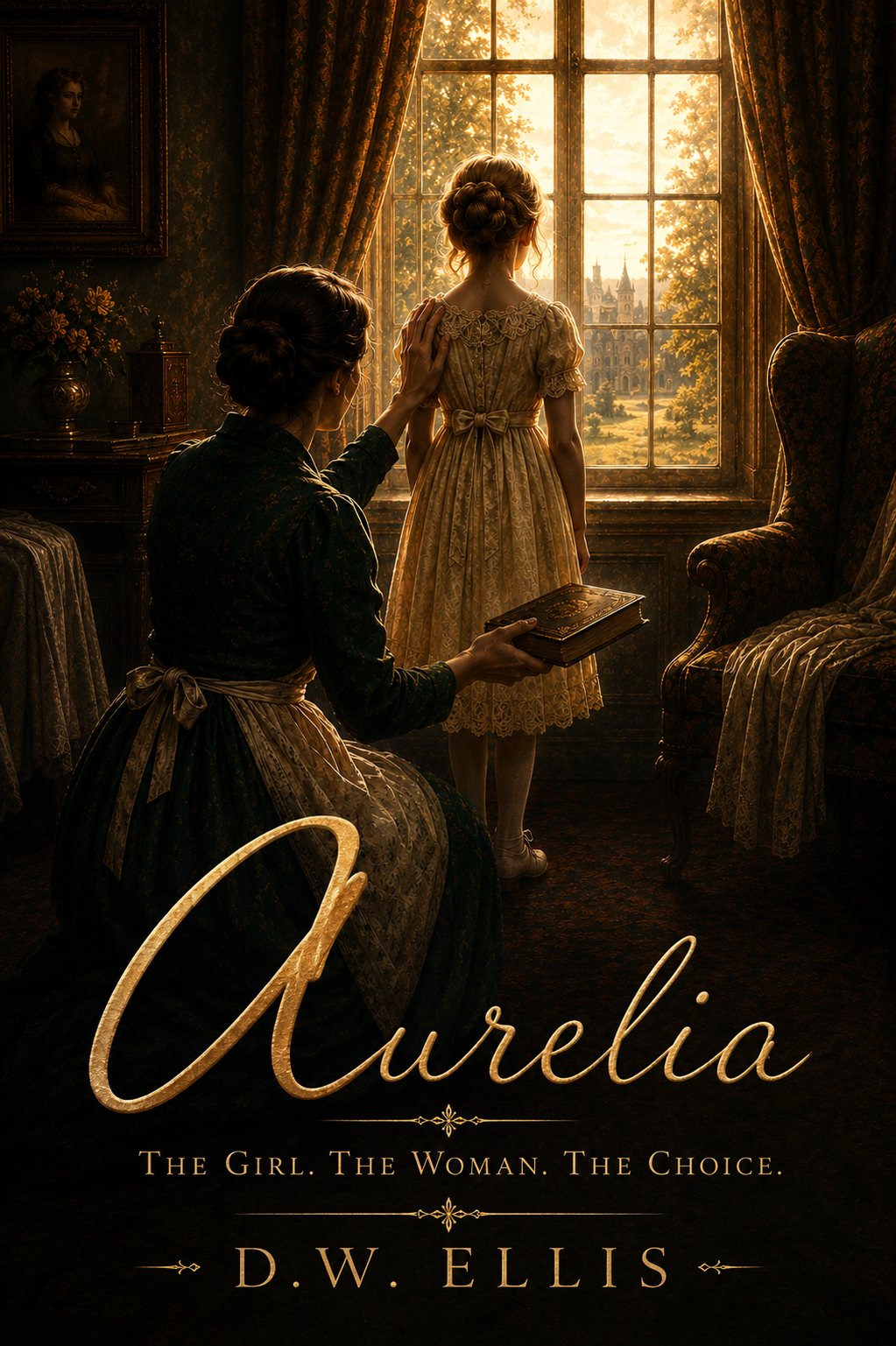
Aurelia's hands were warm from the hearth as she lifted her daughter from bed, wrapping her in a thick coat that still smelled faintly of cinnamon and cold air. Jewel blinked, confused, hair sticking up in soft curls. She expected morning. Sunlight.
Instead, the world outside her window glowed with a restless shimmer, faint threads of green and gold stirring as if the sky itself had been nudged awake.
"Come," Aurelia whispered.
The halls were quiet, lanterns dimmed to soft green. As Jewel and her mother walked, some lanterns brightened into gentle gold at the edges, reacting to the small, warm presence of a child.
Snowflakes drifted like sparks, catching the pale glow of the Aurora above — a winding trail of color, mostly green, with flickers of gold bending toward them like curious eyes.
At the edge of the courtyard, reindeer stamped against the frost. And beside them stood her father.
He was dressed in red.
The sleigh behind him hummed with a faint gold pulse, as if the Aurora breathed through the wood. When Harlan lifted her, the lantern beside them flared briefly to gold. Aurelia hummed, and the Aurora responded with a soft downward curve of light — a gentle gold arc bending in acknowledgment of the lullaby.
"My little light," he whispered. "I have a gift for you."
"Really, Papa, what is it?"
Harlan handed her a beautiful box decked out in bows and ribbons.
"Papa, it's so pretty… I don't want to open it."
"That's the thing about gifts, my little light. They're meant to be memorable. Sometimes what's inside is even better than how it's wrapped. What do you say? Shall we open it?"
"Oh yes, Papa. Oh! Oh my Papa, what a beautiful red scarf!"
She pressed it to her cheek. "It's so soft. I love it."
"You take care of that, my little light. It is precious, just like you."
Aurelia smiled softly from behind her, eyes lingering on the scarf for a moment longer than Jewel understood.
When Harlan stepped into the sleigh, the Aurora dipped low — a soft, shimmering bow, threads of green and gold curling like a farewell blessing.
Later, Jewel would forget the details of this night.
The hush of the snow.
The glow of the lanterns.
The shapes of the colors above.
But not the gift.
Not the hum.
Not the name he called her.
Little light.
The man the story was always for
He was not an easy man.
Jewel Melton had four children and one great love — Willie Wyonel, his soulmate — and when she died, leaving his youngest just eleven years old, he broke in the way that some men break: loudly, and for a long time. There were years of drinking. Multiple marriages. A first-grade education and a guitar he played like it was the only language left that told the truth. He was not gentle. He was not simple. He was a son of a bitch who was trying to find his way back to something he'd dropped somewhere in his grief.
My father served fifteen years in the United States Air Force. He was away a great deal — a man of service, carrying his own weight across long deployments and longer silences. When my mother moved us into a camper on Jewel Melton's property — three kids, a stretch of uncertainty — I was in first grade and struggling to read.
Jewel Melton, a man who had never gotten past first grade himself, decided that was not going to be my story.
Every night, we sat on his back porch together. A grown man and a child, learning to read side by side in the dark. He taught me to fish — including that gummy bears work just as well as bait if you believe in them. He put me behind heavy machinery and said pay attention. He taught me to care for livestock, to read land, to be useful in the world.
When I was twelve, he was diagnosed with cancer.
He had an 80s Toyota pickup truck. Extended cab. Four-wheel drive. Red. It was his baby — no one else had ever driven it. Not once.
The week before his surgery to have a lung removed, he came and got me every single day. For six days straight, he taught me how to drive that truck. He did not explain why. He did not say goodbye. He just put me behind the wheel and gave me something I could carry forward.
He had the surgery the next morning.
He never came home.
Harlan Claus winds a clock every morning that hasn't run in years. He teaches without lecturing. He carries weight without announcing it. He calls his daughter little light the way only a man who has lived in darkness can say those words and mean them completely.
That is Jewel Melton. That is my father, who served so we could be safe while he was gone. Both men shaped what it means to carry something faithfully. Both of them live in these pages.
Jewel the character is always reaching toward the people who need something. Not because she is good by nature. Because someone showed her — on a back porch in the dark — that choosing to turn toward love, even late, even imperfectly, even when it costs you, is the whole point of being here.
His name is first on the Wall. It will always be first.
Between the great events, the North is simply lived. Snow in the courtyard. Laughter in the halls. The ordinary moments that make the extraordinary ones worth fighting for.
No one remembers who threw first. Everyone remembers who won. The official record — kept by Aurelia, who maintains the official records of everything — lists the outcome as inconclusive. The unofficial record, kept by everyone else, is considerably more specific.
There are moments that do not belong to the story. They belong to the people inside it. This is one of those. Whatever was said in the second before this, it was exactly right — and whoever said it knew, even then, that they would never be able to repeat it on purpose.
More moments coming as the North reveals them.
If you have come this far with me, then you already know what it feels like to stand beneath the lights and wonder if they will hold.
The covenant of the North was never reserved for those born into it. It has always belonged to those who choose to carry it forward.
There is a wall beneath the Aurora where a red scarf is placed beside every name. Not because the people who stand there are perfect. Not because they have done something extraordinary.
Because they chose to stay when it mattered.The Wall is not quiet. It hums. Every name written in steady hands. Different lives. One shared decision.
When your name stands among them, you will not feel larger.
You will feel held. If this story found you, and something in it felt like home — tell me.If this story found you, and something in it felt like home — leave your name among those who stayed.